



As a new homeowner, deciding on the right kitchen appliances can be a bit like solving a culinary puzzle. With terms like oven, stove, and range often used interchangeably, it’s easy to get tangled in a web of confusion. Are they the same, or do they serve different purposes? Here, we aim to clear the air by dissecting the difference between oven and stove, exploring the difference between stove and range, and much more. Here’s a sneak peek at our questions: What is the oven definition, and how does it differ from a stove and a range? What are the various types of ovens, stoves, and ranges? Tips on oven installation, stove installation, and range installation. Stay tuned as we find out the stove oven range difference and help you make an informed decision for your kitchen!
Stove, oven and range definitions
When it comes to kitchen appliances, the terms stove, oven, and range often lead to a bit of head-scratching. The reason for this confusion primarily stems from their overlapping functionalities and appearances. In many households, these appliances are seen working in tandem or even combined, which blurs the lines of their distinct identities. To add to the complexity, the terminology can vary regionally, and the evolution of kitchen technology brings in even more variants. But whether you’re puzzling over a gas stove, an electric oven, or a range that combines the best of both, there’s no need to fret. At Appliance Care of Atlanta, we understand these nuances and provide expert services for oven repair, stove maintenance, range installation, and more, covering all your kitchen appliance needs regardless of the type.
What is oven?
An oven is a kitchen appliance specifically designed for cooking and baking. It’s essentially a chamber that heats up and maintains a consistent temperature, making it ideal for baking bread, roasting meats, or even cooking casseroles. Unlike a stove or a range, an oven doesn’t have burners on top for pots and pans. Instead, it focuses on inside cooking, enclosed with a door.
There are various types of ovens to suit different culinary needs and kitchen styles. The two primary categories are electric ovens and gas ovens. Electric ovens are known for their even heat distribution, making them perfect for baking. On the other hand, gas ovens offer quick heat adjustments and are often favored for their moisture retention, which is beneficial for roasting. Modern ovens also come with a range of features, such as self-cleaning options, convection fans for uniform cooking, and digital controls for precise temperature management.
What is stove?
A stove, often referred to as a cooktop, is a kitchen appliance specifically designed for the purpose of cooking food on its surface. Unlike an oven, which is used for baking or roasting inside a closed compartment, a stove provides direct heat from above to pots and pans placed on its burners or heating elements. This makes it ideal for boiling, frying, simmering, and sautéing.
Stoves come in various types, primarily categorized as electric stoves and gas stoves. Electric stoves are known for their smooth, flat surfaces, making them easy to clean, and they offer precise temperature control. Gas stoves, on the other hand, are preferred by many for their quick heat response and the ability to cook with a flame, which can be crucial for certain cooking techniques. Some stoves also feature advanced options like induction cooking, which uses electromagnetic fields for efficient and rapid heating.
What is range?
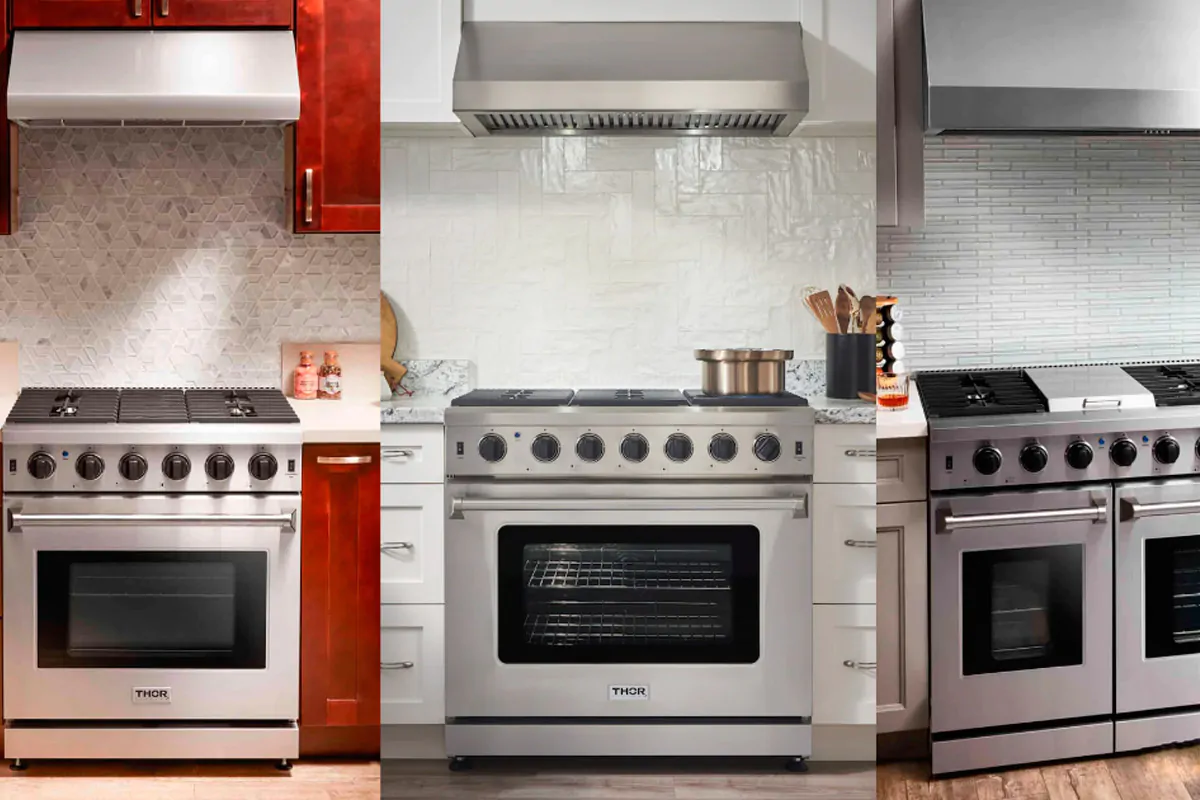
A range is essentially a two-in-one solution, combining both a stove and an oven into a single unit. This appliance is a versatile cornerstone in many kitchens, offering the functionality of an oven for baking and roasting below, and a stove for cooking on top. Its all-in-one design makes it a practical choice for space-saving and streamlined cooking experiences.
Ranges are available in a variety of types, including electric ranges, gas ranges, and dual-fuel options that offer both electric and gas cooking capabilities. Electric ranges typically feature a smooth cooktop and an electric oven, known for their even baking qualities. Gas ranges, popular for their precise temperature control on the stove and moisture-retaining qualities in the oven, are often the go-to choice for avid cooks. Some ranges also come with additional features like convection ovens for faster, more even cooking, or extra burners and griddles for increased cooking versatility.
Stove vs oven vs range
Each of these appliances has its unique strengths and may be more suitable for certain environments and cooking styles. In the following sections, we’ll discover the main differences, strengths, and potential drawbacks of each type. Understanding these differences is crucial, whether you’re a home cook experimenting with new recipes or someone who enjoys hosting large gatherings. We’ll explore why certain kitchens might prefer an electric oven, the benefits of a gas stove, or the convenience of an electric range. And remember, if you ever face any issues or need maintenance for your oven, stove, or range, Appliance Care of Atlanta is just a call away. Our expertise ensures that whatever your choice, it will be well-maintained and ready to support your culinary adventures.
Stove and oven differences
When it comes to understanding the difference between stove and oven, it’s important to recognize their unique characteristics and functionalities. Here’s a list of key differences:
- Functionality: A stove is primarily used for cooking with direct heat applied from the top, perfect for boiling, frying, or simmering. An oven, on the other hand, is designed for baking, roasting, and broiling using enclosed heat.
- Heat source placement. In a stove, the heat source is located on the top, where pots and pans are placed directly. In an oven, the heat surrounds the food, coming from either the top, bottom, or both sides.
- Temperature control. Ovens offer precise control over the baking environment, allowing for consistent heat throughout. Stoves require more manual temperature management, especially when using a gas stove.
- Cooking method. The oven is about indirect heat and a controlled environment, ideal for dishes that need even cooking or a specific temperature. A stove is for direct, hands-on cooking, great for dishes requiring constant attention or quick heat adjustments.
- Utility in the kitchen. While a stove is essential for everyday cooking tasks like boiling pasta or sautéing vegetables, an oven is indispensable for baking, roasting, and preparing large meals.
Understanding these differences helps in choosing the right appliance for your needs. Whether it’s oven maintanance, stove repair, or simply deciding which appliance suits your cooking style, Appliance Care of Atlanta is here to help.
Stove and range differences
Understanding the difference between stove and range can be crucial for making the right choice for your kitchen. Here’s a breakdown of their key differences:
- Appliance composition. A stove, or cooktop, is solely the cooking surface with burners or heating elements. A range combines both a cooktop (stove) and an oven in one appliance.
- Space and layout considerations. A standalone stove offers flexibility in kitchen design, as it can be installed separately from the oven. A range, being a larger, single unit, requires more dedicated space.
- Installation requirements. Range installation is typically a one-step process, integrating both cooking and baking functions. In contrast, a stove requires separate installation from an oven if both are needed in the kitchen.
- Utility and convenience. A range is often more convenient for most households as it provides a central station for all cooking – both stovetop and oven. A standalone stove is ideal for kitchens where the oven is infrequently used or placed in a different location.
- Cost Implications. Buying a range is more cost-effective than purchasing a separate stove and oven. However, high-end or custom stoves can alter this equation.
Regardless of whether you choose a stove or a range, proper ventilation is crucial. This is where range hood installation comes into play. A range hood, installed above either a stove or range, helps to remove smoke, heat, and cooking odors, ensuring a safer and more comfortable cooking environment. Experiencing inconveniences with your range hood? Appliance Care of Atlanta provides a range of hood repair services.
Oven and range differences
Distinguishing between an oven and a range is key in understanding their roles in the kitchen. Here are the main differences:
- Kitchen layout and space usage. A standalone oven can be built into a kitchen wall or cabinet, offering more flexibility in kitchen design. A range, as a larger unit, serves as a central cooking station, combining two appliances into one footprint.
- Cooking capacity and style. While both have ovens, the range allows for simultaneous use of the stove and oven, catering to multitasking in the kitchen. A standalone oven focuses on baking and roasting tasks independently.
- Energy efficiency. Depending on the model and usage, a range may be more energy-efficient for households that frequently use both the stove and oven simultaneously instead of running two separate appliances.
- Installation and maintenance. Range installation typically involves a single process, while an oven, especially a wall oven, may require more complex installation. In terms of maintenance, ranges might need more frequent attention, given their dual functionality.
- Cost considerations. Purchasing a range is often more cost-effective than buying a separate stove and oven, though high-end or specialized models can vary in price.
Whether you lean towards a standalone oven for your baking and roasting needs or prefer the all-in-one convenience of a range, each has its place in the modern kitchen. And remember, for any oven repair or range maintenance, Appliance Care of Atlanta is here to ensure your appliances are always in top form.
Oven, stove and range installation
The installation of a kitchen appliance, be it an oven, stove, or range, is a process that requires careful consideration and expertise. When performing oven installation, especially a built-in model, it’s crucial to ensure that it fits seamlessly into your kitchen cabinetry. This involves precise measurements and sometimes cabinetry modifications. The installation process varies between electric ovens and gas ovens, with gas models requiring a secure connection to a gas line. For stove installation, the key factors include proper alignment with countertops, secure electrical or gas connections, and ensuring that the exhaust system or range hood is correctly positioned and functional.
When it comes to range installation, it combines aspects of both oven and stove installation. It’s important to have a perfect fit within the kitchen space, proper electrical or gas connections, and adequate ventilation. Ranges typically serve as a focal point in the kitchen, so ensuring a seamless and aesthetically pleasing installation is just as important as the technical aspects. At Appliance Care of Atlanta, we offer professional installation services that cater to your specific needs. Whether it’s installing a sleek new electric stove, a gas range, or a sophisticated wall oven, our team ensures a hassle-free installation process. We take care to avoid damaging your kitchen and can handle even the trickiest installation requirements. With our expertise, you can trust that your kitchen appliances will not only look great but also function perfectly, enhancing your culinary experience.
Oven, stove and range maintenance
Regular maintenance is key to prolonging the lifespan and ensuring the optimal performance of your oven, stove, or range. For ovens, this includes routine cleaning to prevent the buildup of food residues and checking the door seals to ensure heat is not escaping. If you have a self-cleaning oven, understanding how to use this feature correctly is important. For stoves, particularly gas stoves, it’s crucial to keep the burners clean for efficient cooking and to check for any gas leaks periodically. With electric stoves, maintaining the integrity of the heating elements and the smooth surface is important for safety and performance.
When it comes to range maintenance, they require a combination of tasks. This includes cleaning the cooktop, checking the burners or heating elements, ensuring the oven cavity is clean, and that the appliance is functioning efficiently as a whole. Regular maintenance not only keeps your appliance in good working condition but can also prevent more serious issues and costly repairs down the line. At Appliance Care of Atlanta, we offer comprehensive maintenance services for all types of kitchen appliances. Whether it’s an electric range, a gas oven, or a traditional stove, our expert technicians can provide the necessary care and attention to keep your appliances running smoothly.
Oven, stove and range repair
When it comes to the repair of ovens, stoves, and ranges, each type of appliance presents its own set of challenges and solutions. For ovens, common issues often involve heating elements, either in electric ovens or gas ovens. In electric models, this could mean replacing burnt-out elements, while in gas ovens, it might involve fixing ignition problems or gas leaks. Another common issue with ovens is thermostat failure, which affects the oven’s ability to maintain the correct temperature. Regular wear and tear can also lead to problems with door seals and self-cleaning mechanisms, which are crucial for the oven’s efficiency and safety.
Stove repairs can vary depending on whether you have an electric stove or a gas stove. For electric stoves, repairs often involve addressing issues with the heating elements or the electric connections that power them. Gas stoves, meanwhile, may require maintenance on the burners, pilot lights, or the gas supply line. With range repair, the potential issues and repairs can be more complex. Problems could arise in either the cooktop or the oven portion or sometimes in the systems that support both, like electrical connections or gas lines.
Conclusion
Understanding the differences between an oven, a stove, and a range is essential for any homeowner or cooking enthusiast. Each has its unique strengths and fits different cooking styles and kitchen layouts. Whether you’re a gourmet chef or someone who enjoys the occasional home-cooked meal, recognizing these differences helps in choosing the right appliance for your culinary needs.
As your reliable appliance care specialists, Appliance Care of Atlanta is here to assist you in every aspect of your kitchen appliance journey. From oven installation and range maintenance to stove repair, our team of experts is equipped to handle a variety of needs across different types and brands of appliances. We take pride in offering same-day services and have a portfolio of impressive testimonials reflecting our commitment to excellence and customer satisfaction. Remember, whether it’s a routine check-up, an urgent repair, or expert advice on your kitchen appliances, you can count on us to provide professional and efficient service. Contact us for your appliance care needs and experience the expertise and reliability that set us apart.
[publishpress_authors_box layout=”ppma_boxes_9358″]